
Your Building’s Exterior Is Telling You Something — Masonry Facade Rehabilitation in Chicago
In Chicago, harsh winters push building exteriors past their limits faster than almost anywhere else in the country. Freeze-thaw cycles crack mortar, spall bricks, and open up gaps that let water behind your walls before you ever notice a problem inside. This page covers masonry facade rehabilitation — what it includes, who needs it, and what the full process looks like. Whether you own a vintage greystone, a commercial building, or a multi-unit rental, Casey Tuckpointing offers free on-site assessments with no obligation.
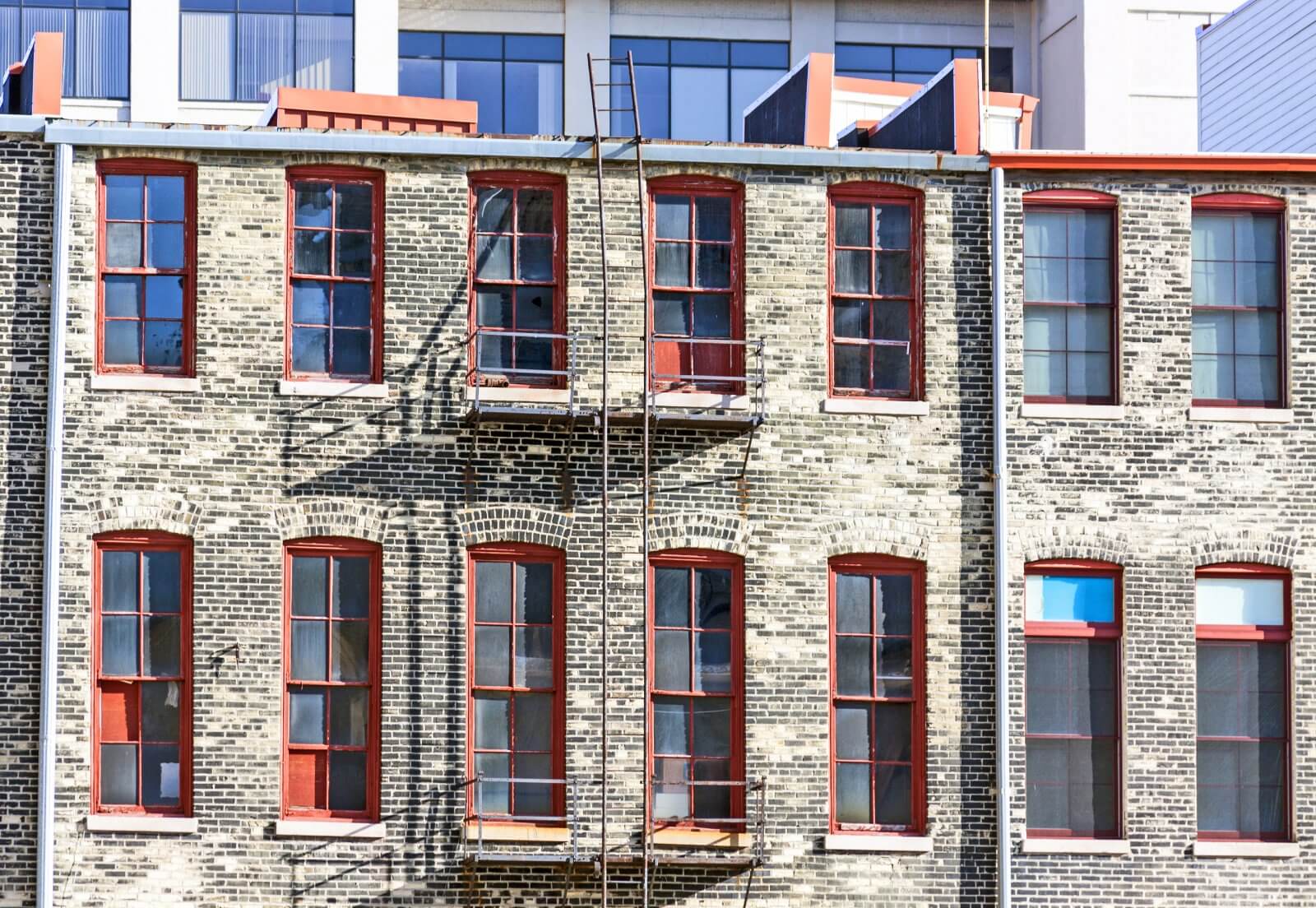
A Facade Is the Entire Front Face of Your Building — and in Chicago, It Takes a Beating Every Year
The word “facade” simply means the exterior face of a building — the full surface of brick, stone, or concrete that faces outward and takes direct exposure to weather, traffic vibration, and time.
Most Chicago property owners think of the facade as just the front wall. In practice, it includes every exterior masonry surface: front and side walls, parapets at the roofline, window and door surrounds, cornices, and decorative stonework. All of it is exposed. All of it deteriorates.
Chicago’s dense urban blocks make this especially important. When a facade problem goes unaddressed on one building, it can affect neighboring structures — loose bricks fall, water migrates through shared walls, and city inspectors cite the whole block. Acting early protects your building and your neighbors.
Facade Restoration Means Bringing a Deteriorated Exterior Back to Safe, Sound, Working Condition
“Facade restoration” and “facade rehabilitation” mean the same thing in practice: a licensed mason assesses every failure point on your building’s exterior, then repairs each one systematically until the surface is structurally sound and weather-resistant again.
This is different from a patch job. A patch covers the symptom. Rehabilitation addresses the cause — failed mortar joints, cracked lintels, water infiltration behind the brick face, deteriorated coping at the roofline. When the underlying cause is fixed, the repair holds.
For Chicago building owners who have received a notice from the Department of Buildings, facade rehabilitation is typically exactly what’s required to clear the citation. A licensed contractor documents all work performed, and that documentation goes to the city to close out the violation.
Crumbling Bricks and Spalling Masonry Are Signs of a Deeper Problem — Not Just Age
If you own an older building in Lincoln Square, Bridgeport, or anywhere else on Chicago’s North or South sides, you may have noticed brick faces that look like they’re peeling, powdering, or breaking apart in chunks. That’s called spalling — and it’s not just cosmetic.
Here’s what’s actually happening: water gets into a small crack or a failed mortar joint. It soaks into the brick. When temperatures drop, that water freezes and expands inside the brick itself, forcing the face of the brick outward until it breaks off. Chicago averages more than 20 freeze-thaw cycles every winter. Each one does a little more damage.
The bricks aren’t failing because they’re cheap or old. They’re failing because water found a way in and the freeze-thaw cycle did the rest. Fix the entry point — usually the mortar — and you stop the cycle. Leave it, and the brick damage spreads to every course above and below.
A 20-Year-Old Chicago Building Already Needs a Professional Facade Assessment
There’s a common assumption that newer buildings don’t need masonry work yet. If your building went up in the late 1990s or early 2000s, it feels recent. But 20 years of Chicago winters is a lot of freeze-thaw cycles — more cumulative stress than a 20-year-old building would carry in Atlanta, Dallas, or Los Angeles.
By the time a Chicago building hits its 20th year, mortar joints are typically starting to crack and recede. Sealants around windows and door frames have often failed. Coping stones at the roofline may be shifting. None of this is visible from the street — but a professional mason sees it immediately on a close-up assessment.
Catching these failures at 20 years means a straightforward repair visit. Catching them at 30 years — after two more decades of water infiltration — often means full facade rehabilitation, scaffolding, and a multi-week project. The assessment itself is free. The difference in scope is significant.
The Masonry Facade Rehabilitation Process on a Chicago Building — Step by Step
For owners in Andersonville, the Near North Side, or anywhere across Chicago who are ready to move forward, here’s exactly what a full facade rehabilitation project involves.
Step 1 — On-site assessment. A licensed mason walks the full exterior, inspects joints, lintels, coping, parapets, and decorative elements. Every failure point is documented. You get a clear picture of what needs to be done before any work begins.
Step 2 — Permit pulling. For any work above the ground floor, Chicago requires a scaffolding permit. Your contractor handles this — you don’t chase city paperwork.
Step 3 — Scaffolding and access. Proper staging goes up so the crew can reach every section of the facade safely and work systematically from top to bottom.
Step 4 — Structural repairs first. Lintels, parapets, cracked or missing bricks, and failed coping are addressed before surface work begins. Structure before cosmetics — always.
Step 5 — Tuckpointing. All deteriorated mortar joints are ground out and repacked with fresh mortar matched to the existing color and hardness profile of the building.
Step 6 — Cleaning. Carbon buildup, staining, and efflorescence are cleaned from the brick and stone surface using methods appropriate for the material — no pressure washing that damages soft brick.
Step 7 — Waterproofing. A breathable Silane/Siloxane sealer is applied to the cleaned, repaired surface. It repels water while allowing the masonry to breathe — critical in a climate like Chicago’s.
Step 8 — Final inspection and documentation. Work is reviewed, photographed, and documented. If the project was triggered by a city violation, the documentation goes straight to the Department of Buildings.
Regular Facade Maintenance Keeps Your Chicago Building Off the Violation List
The most expensive masonry project is always the one that didn’t have to be that big.
Condo associations, landlords, and commercial building managers across Chicago who stay ahead of facade maintenance with inspections every five to seven years never face the full-scale rehabilitation timeline. Small mortar failures get caught before they open up. A single spalled brick gets replaced before the course above it starts to go. Minor caulking failures around windows get resealed before water finds a path inside.
It’s also worth knowing that Chicago’s Facade Inspection Safety Program — FISP — requires periodic professional facade inspections for buildings over 80 feet tall. If your building falls under that program, proactive maintenance makes compliance straightforward. You’re already staying on top of it.
For buildings that don’t fall under FISP, the principle is the same: a licensed masonry contractor on-site every few years costs a fraction of what deferred maintenance eventually demands.
Frequently Asked Questions About Masonry Facade Rehabilitation in Chicago
What does masonry facade rehabilitation include for a Chicago building? A full rehabilitation typically combines tuckpointing, brick repair or replacement, facade cleaning, and waterproof sealing — all assessed and coordinated by a licensed masonry contractor as one project rather than separate visits.
How long does a masonry facade last in Chicago’s climate? A professionally rehabilitated facade lasts 25 to 30 years. Chicago’s freeze-thaw cycles put more stress on masonry than most U.S. cities — routine maintenance every five to seven years keeps the exterior in good condition between major projects.
Why are the bricks on my Chicago building crumbling? In most cases, water entered through a failed mortar joint or crack, soaked into the brick, and then froze and expanded during a cold snap. That expansion breaks the brick face from the inside out. A licensed mason can confirm the cause and scope during a free on-site assessment.
Is a 20-year-old Chicago building old enough to need facade work? Yes. Chicago’s climate ages masonry faster than most cities. By 20 years, mortar joints are typically receding, sealants are failing, and coping is starting to shift — none of it visible from the street, but all of it fixable at low cost if caught early.
How do I maintain my building’s facade to avoid full rehabilitation? Schedule a professional masonry inspection every five to seven years, address mortar failures as soon as they appear, and apply a breathable waterproof sealer after any repair work. Small interventions done consistently prevent large-scale projects down the road.
Will facade rehabilitation fix a Chicago Department of Buildings violation? Yes. A licensed contractor performs and documents all required repairs, and that documentation is submitted directly to the city to satisfy and close out facade-related citations.
Give us a call today at (847) 962-6309 for a free estimate. We will come out to you and discuss the job that is needed to be done in order to restore and improve your homes appearance.