
Built to Last 100 Years — Professional Brick Wall Construction in Chicago
In Chicago, brick wall construction done right outlasts every other exterior building material by decades. The city’s oldest neighborhoods are proof — brick walls from the 1880s are still standing, still solid, still adding value to the properties they define. This page covers new brick wall construction in Chicago: common use cases, how to choose the right brick, what professional technique actually looks like, and what your wall needs to stay in shape for a century. Casey Tuckpointing serves homeowners, developers, and commercial property owners across Chicago and the surrounding suburbs. Contact us for a free on-site estimate.
A New Brick Wall Adds Lasting Value to Any Chicago Property — Residential or Commercial
Before any bricks get laid, it’s worth understanding what you’re actually getting when you invest in new brick wall construction.
Brick is the only exterior building material that consistently increases resale value in Chicago’s real estate market. Appraisers recognize it. Buyers seek it out. In neighborhoods like Lincoln Park, Hyde Park, and Andersonville, buyers specifically filter for brick-built properties — and they pay more for them. That premium reflects something real: brick outlasts everything else, requires almost no maintenance when built correctly, and holds its appearance decade after decade.
New brick wall construction in Chicago covers a wide range of projects: garden walls and privacy walls between properties, courtyard enclosures, structural exterior walls on new homes or additions, retaining walls, decorative facade elements on commercial buildings, and full building exteriors on new construction and gut rehabs. The scale changes. The material and the principles don’t.
Choosing the Right Brick Type for Chicago’s Climate Is the Most Important Decision Before Construction Begins
Not all bricks are the same. Walk into a masonry supply yard and you’ll find bricks rated for different levels of weather exposure — and in Chicago, using the wrong rating is one of the most expensive mistakes a property owner can make.
The five main brick types you’ll encounter are common brick, face brick, engineering brick, firebrick, and glazed brick. For exterior wall construction in Chicago, the relevant specification isn’t the type — it’s the weathering grade. Bricks are graded SW (severe weathering), MW (moderate weathering), and NW (negligible weathering). In Chicago, exterior walls require Grade SW brick. Full stop.
Here’s why it matters: Chicago averages more than 20 freeze-thaw cycles every winter. Water gets into porous brick, freezes, expands, and breaks the brick face apart from the inside. Grade SW brick is manufactured and fired to withstand exactly that stress. MW and NW brick are not.
A licensed Chicago mason specifies Grade SW automatically. An inexperienced contractor — or a DIY build — may not know the difference. Using the wrong grade means a wall that looks fine for five years and then starts spalling, cracking, and deteriorating at every course. Fixing it means tearing it down and starting over.
The right brick, specified correctly from the start, is the single most important decision in the entire project.
Professional Bricklaying Technique Determines Whether Your Wall Lasts 30 Years or 100
Brick is a durable material. But brick laid incorrectly fails fast. The difference between a wall that lasts a century and one that needs major repair in 15 years comes down almost entirely to technique.
Here’s what professional bricklaying actually involves:
Foundation and footing. Every brick wall starts below grade. The footing must be sized and set deep enough to sit below Chicago’s frost line — roughly 42 inches. A footing that’s too shallow will heave with the freeze-thaw cycle and crack the wall above it.
Mortar mix. The mortar must match the hardness of the brick. Using a mortar that’s too hard — like Portland cement mortar on a softer historic brick — causes the brick face to spall when the wall moves. A mason matches the mortar to the material.
Bond pattern. Bricks are laid in specific overlapping patterns — running bond, Flemish bond, English bond — that distribute load and tie the wall together structurally. Random stacking without a proper bond pattern produces a weak wall.
Joint tooling. Every mortar joint is tooled while the mortar is still green — pressed and shaped to shed water away from the wall face. Flat or raked joints hold water and accelerate deterioration. Properly tooled concave joints don’t.
Plumb and level. Every course is checked for level. Every vertical joint is checked for plumb. A wall that goes up crooked can’t be fixed without tearing it down.
Walk through Bridgeport or Pilsen and look at the brick walls that have been standing since the early 1900s. They’re still plumb. The joints are still tight. That’s what professional technique produces — and it hasn’t changed because it works.
The Most Common Brick Wall Problems in Chicago — and How Proper Construction Prevents Every One
If you’ve seen a neighbor’s brick wall fail — or if you’re replacing one that didn’t hold up — it’s worth knowing what went wrong. Most brick wall failures in Chicago trace back to the same five causes.
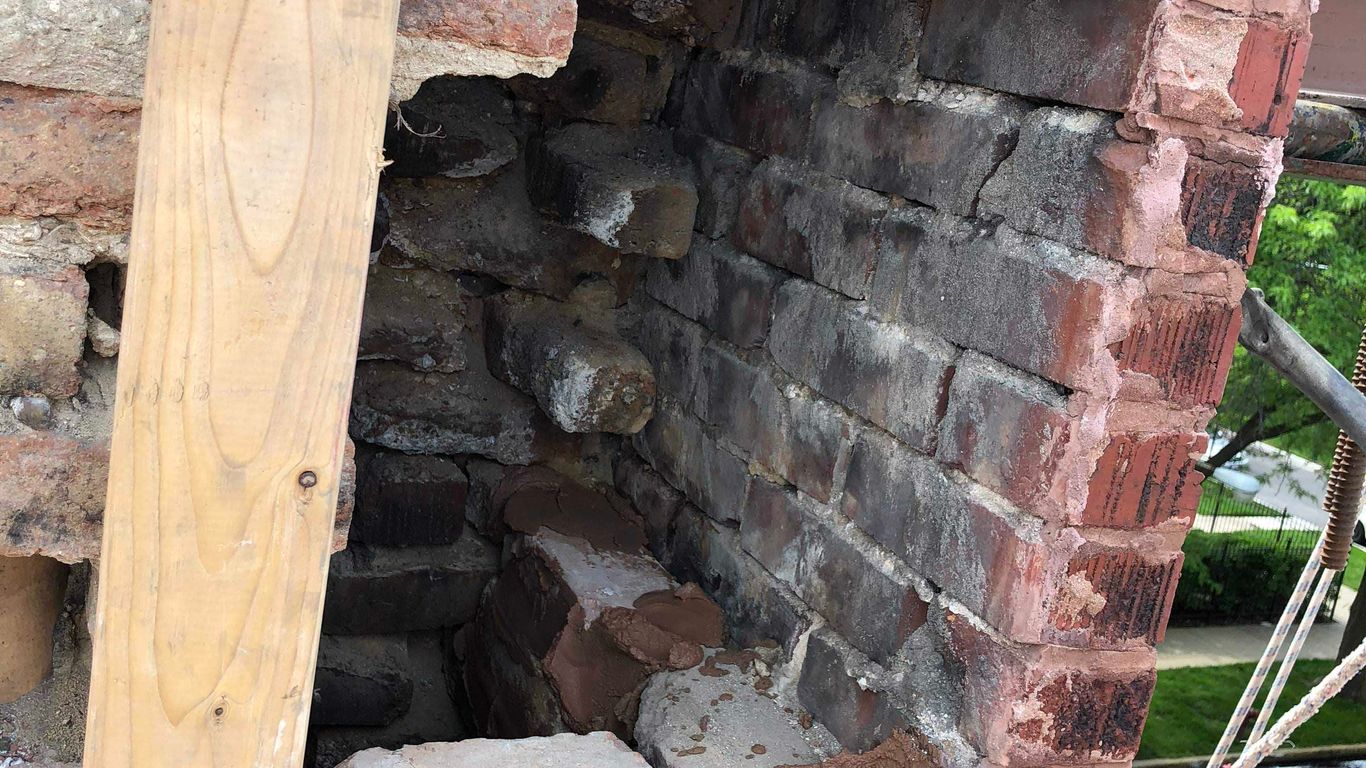
Spalling bricks. The brick face breaks off in flakes or chunks. Almost always caused by using the wrong brick grade (MW instead of SW) or water infiltration through failed joints. Prevented by specifying Grade SW brick and tooling every joint correctly.
Efflorescence. White salt deposits appear on the brick face. Water is moving through the wall and depositing minerals on the surface as it evaporates. Prevented by proper flashing, sealed joints, and a breathable waterproof sealer after construction.
Stair-step cracking in mortar joints. The wall is moving — either from footing settlement, frost heave, or clay soil expansion. Chicago’s clay soil expands significantly when wet and contracts when dry. A footing set below the frost line and designed for soil movement prevents this.
Mortar joint failure. Joints crack, recede, or crumble within a few years. Caused by the wrong mortar mix, joints that weren’t tooled properly, or mortar applied in cold weather without protection. A licensed mason works in appropriate conditions and uses the right mix every time.
Water infiltration behind the wall face. Water gets behind the brick and damages the structure behind it. Prevented by installing proper through-wall flashing at base courses, window openings, and wall tops — and sealing all penetrations.
Every one of these failures is preventable. A licensed mason who knows Chicago’s climate designs for all of them from the footing up.
A Finished Brick Wall Should Look Clean, Sharp, and Consistent — Here’s How Professionals Get There
Structural integrity is the foundation of a quality brick wall. But appearance matters too — especially in Chicago’s historic neighborhoods, where new construction sits next to century-old masonry and needs to look like it belongs.
After the last course is laid and the mortar has cured, a professional mason does three things before calling the job complete.
Brick cleaning. New brickwork almost always has mortar haze on the face — a film of mortar residue left from the laying process. Professionals remove it with a diluted acid wash or a specialized masonry cleaner, applied carefully and rinsed completely. High-pressure washing is never used on fresh mortar joints — the pressure blows out the joint before it has fully cured.
Final joint inspection. Every joint is walked and checked. Any missed spots, holidays in the mortar, or joints that weren’t tooled correctly are repaired before the scaffold comes down.
Color and texture matching. In neighborhoods like Roscoe Village, Andersonville, and across Chicago’s historic North and South sides, new brick construction is expected to complement the surrounding streetscape. A skilled mason matches the brick color, mortar tone, and joint profile to the existing context — not just whatever’s in stock at the supply yard.
The result is a wall that looks sharp from day one, blends naturally with its surroundings, and stays that way with minimal maintenance.
Brick Walls in Chicago Last a Century When They’re Built Right and Maintained Simply
One of the most common questions property owners ask before committing to brick wall construction is: what does upkeep actually look like?
The honest answer is: not much — if the wall was built correctly.
A professionally built brick wall in Chicago needs a mortar inspection every five to seven years. If any joints are starting to crack or recede, those sections get repointed before water finds its way in. That’s a small repair visit, not a major project. Every 10 to 15 years, a breathable waterproof sealer can be reapplied to the surface to maintain the moisture barrier. That’s essentially the full maintenance schedule for a well-built wall.
Compare that to wood siding, which needs painting every five to seven years, is vulnerable to rot and insect damage, and has a practical lifespan of 20 to 40 years before replacement. Or vinyl, which warps, fades, and cracks under Chicago’s temperature swings. Brick outlasts both by generations.
The 19th-century brick buildings still standing in the Loop, on the North Side, and in Chicago’s historic factory districts didn’t survive because brick is indestructible. They survived because they were built correctly — right brick, right mortar, right technique — and given basic attention over time. That’s the standard a licensed Chicago mason builds to on every project.
Frequently Asked Questions About Brick Wall Construction in Chicago
Does a new brick wall increase home value in Chicago?
Yes. Chicago appraisers and buyers consistently value brick construction higher than other exterior materials. It’s one of the strongest return-on-investment exterior projects in the local market, particularly in established neighborhoods where brick is the dominant building material.
What type of brick should be used for new construction in Chicago?
Grade SW — severe weathering — brick is required for exterior wall construction in Chicago’s climate. It’s manufactured to withstand the 20-plus freeze-thaw cycles Chicago sees every winter. A licensed mason specifies and sources the correct grade as a matter of course.
How long does a professionally built brick wall last in Chicago?
75 to 100 years or more with proper construction and periodic mortar maintenance. Chicago has brick walls still standing and structurally sound from the 1880s — the material is proven in this climate.
What are the most common bricklaying mistakes that shorten a wall’s lifespan?
Using the wrong brick grade, mixing mortar too hard for the brick type, failing to tool joints properly, setting footings above the frost line, and skipping flashing at base courses and openings. A licensed contractor avoids all five by default.
How do professionals clean new brick after construction in Chicago?
With a diluted acid wash or a specialized masonry cleaner applied after the mortar has fully cured. High-pressure washing is never used on fresh brickwork — it damages joints before they’ve reached full strength.
How do I keep a new Chicago brick wall looking good long term?
Inspect mortar joints every five to seven years and repoint any cracks before water infiltrates. Apply a breathable waterproof sealer every 10 to 15 years. That’s the complete maintenance schedule for a well-built brick wall.
Casey Tuckpointing — Masonry Service to Chicago and the Surrounding Suburbs. Contact us for a free estimate: (847) 962-6309 or info@caseytuckpointing.com